
American Dream in Action
Higher education is one of America’s most powerful engines of opportunity and democratic participation. California Community Colleges is the largest system of higher education in the nation, serving 2.2 million students at 116 colleges in every corner of the state. Beyond preparing students for careers, transfer, and economic mobility, our colleges cultivate informed, engaged citizens, bringing together people from diverse backgrounds in pursuit of shared goals. The millions of students who have passed through our classrooms continue to shape California and the nation through their service, leadership, innovation, and commitment to their communities.
As America marks its 250th anniversary, we’re celebrating these students, graduates, educators, and system partners who show what the American idea looks like today and the belief that where you begin does not have to determine where you end up.
Why Community Colleges Matter to America’s Future
America’s 250th Anniversary invites the nation to reflect on our shared past and imagine the future we want to build together.
At California community colleges, that future is already taking shape. Every day, millions of students arrive with different stories and different dreams, whether it’s preparing for their first career, building new skills, returning to school, or becoming the first in their families to attend college. But they all arrive with something powerful: potential and the belief that more is possible.
Our colleges help transform that possibility into opportunity. Together, our college show what the American Dream looks like in real life: education opening doors, careers taking shape, and communities growing stronger because of it.
Carrying the Promise Forward
Vision 2030 is the California Community Colleges’ roadmap for meeting students where they are and helping and helping more Californians complete their goals. It focuses on equity in access, equity in success, and equity in support with a clear connection between education, economic mobility, workforce preparation, and stronger communities.
Through Vision 2030, our colleges are expanding pathways to transfer and completion, helping students earn credentials that lead to living-wage careers, strengthening support for students’ basic needs, and working with employers, agencies, and community partners to prepare Californians for the jobs our state and nation depend on.
That’s why America’s 250th Anniversary and Vision 2030 belong together. One marks a national milestone. The other shows how the California Community Colleges system is carrying the promise forward.
Because when opportunity meets determination, amazing things happen.
A student becomes a graduate.
A dream becomes a career.
A challenge becomes a success story.
And millions of Californians can say: “I can.”
Now more than ever, California’s community colleges are the real American dream in action.
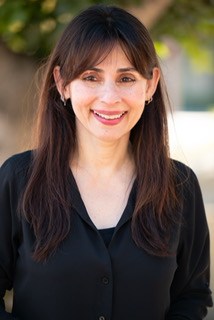
Sonya Christian, Chancellor of California Community Colleges
250 years!
Long enough for a nation to reinvent itself again and again.
What has been a forever … a constant… is the story of possibility.
America’s belief that a person’s future should not be determined by where they were born, what resources they inherited, or the circumstances they faced along the way. It is the enduring idea that the American Dream should be within reach for everyone.
Few institutions embody that ideal more fully than community colleges.
Community colleges are a uniquely American invention. They were created on a simple premise:
Higher education should not be reserved for a select few. It should be readily available to all who seek to learn, grow, and contribute.
As we navigate an era shaped by artificial intelligence, climate challenges, economic transformation, and rapid social change, community colleges continue to stand at the intersection of opportunity and hope. Yes, we prepare students for the jobs of tomorrow, and perhaps more importantly, we also help them develop the judgment, resilience, and civic responsibility needed to strengthen the communities they call home.
America’s 250th is an invitation to recommit ourselves to the values that have always moved our nation forward: opportunity, service, innovation, and the belief that every person has something to contribute.
Across California’s 116 community colleges, I see those values alive every day.
I see them in the student veteran walking into a classroom after military service.
I see them in the working parent taking evening classes after a full day of work.
I see them in the first-generation college student who dares to imagine a future different from the one they inherited.
I see them in the California Community College faculty member, the classified professional and the administrator who refuses to give up on a single student.
I see them in communities that continue to believe that education remains one of the most powerful forces for individual opportunity and collective progress.
If the first 250 years of the American story were about expanding the boundaries of freedom and opportunity, then let the next 250 years be about ensuring that opportunity reaches every community, every family, and every learner.
The American experiment remains unfinished, renewed by each generation through learning, innovation, and service. Every day, across California Community Colleges, in classrooms, laboratories, apprenticeships, libraries, learning centers, and online, millions of students are writing the next chapter of that story.
As we celebrate 250 years, may we have the wisdom to learn from the past, the courage to meet the challenges of the present, and the imagination to build a future worthy of those who come after us.
That is the work before us.
That is the promise of education.
That is the mission of the California Community Colleges.
Our time is now.
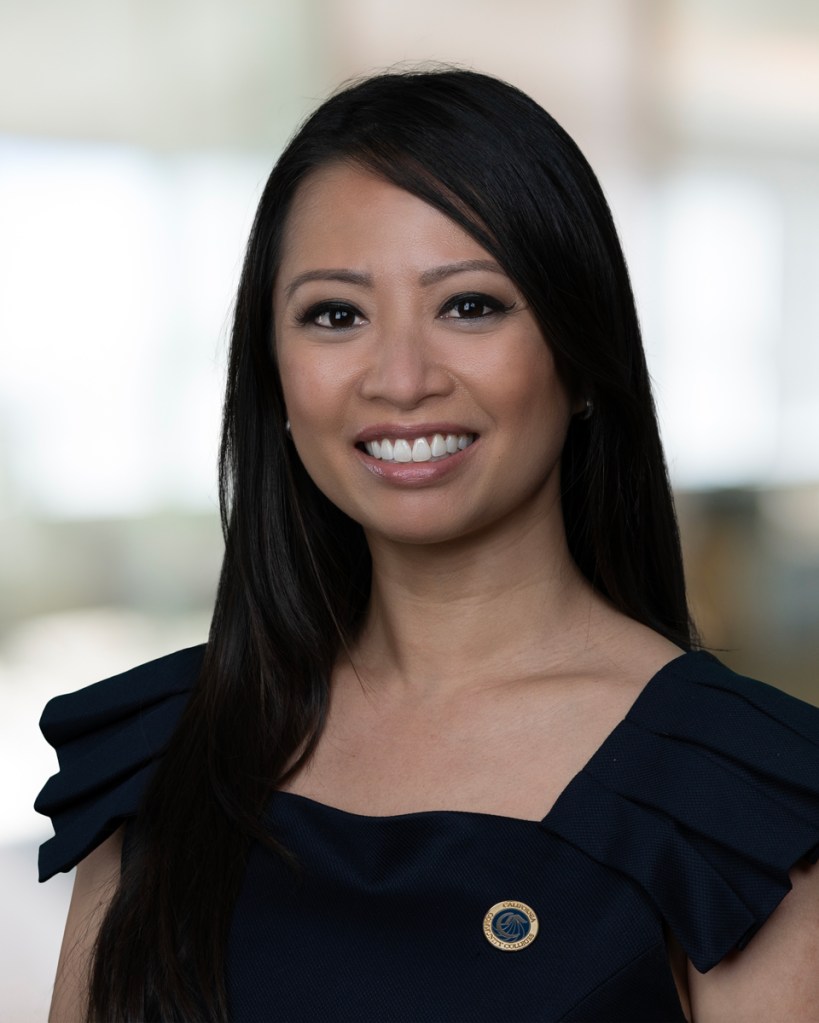
Hildegarde Aguinaldo, Board of Governors President
As our nation commemorates its 250th anniversary, it’s important to reflect on the transformative role our community college system plays in expanding opportunity, strengthening communities, and fueling economic prosperity. The story of our colleges is ultimately a story of people. Over generations, millions of students have come through our doors in pursuit of opportunity and left prepared to contribute their talents, leadership, and determination to the communities they call home.
California community colleges are, in many ways, how California works. Our students become the nurses who care for our families, the teachers who inspire future generations, the skilled trades professionals who build our communities, the entrepreneurs who create jobs, and the innovators who drive our economy forward. Every day, our colleges connect talent to opportunity and help meet the workforce needs that power California’s success.
Yet our impact extends beyond careers and credentials. Community colleges are places of possibility where a high school student can get an early start on college, where a working parent can gain new skills to advance their career, and where someone seeking a new direction can discover new opportunities and renewed purpose. We believe every Californian deserves the chance to define success on their own terms and pursue a dream that reflects their aspirations.
As we celebrate America’s 250th Anniversary, we honor the students, faculty, classified professionals, administrators, alumni, and partners whose contributions continue to strengthen our state and nation. Their stories remind us that higher education remains one of our country’s most powerful engines of opportunity. By expanding access to learning and empowering individuals to reach their full potential, the California Community Colleges system is helping shape the next chapter of the American story, one student, one family, and one community at a time.




More Than 100 Years of Opportunity
California helped invent the community college, and for more than a century it has widened the door to the American Dream.
1907: California authorizes its high schools to offer college-level courses, laying the legal foundation for the nation’s community colleges.
1910: Fresno opens California’s first junior college, among the first in the nation.
1960: The landmark California Master Plan for Higher Education guarantees access to higher education for every resident and cements the colleges’ open-door mission.
1967: California establishes the Board of Governors and Chancellor’s Office to lead the statewide system.
Today: 116 colleges serve more than 2.2 million students a year, the largest system of higher education in the nation.
American Dream Stories
America’s 250th Anniversary invites us to reflect on who we are and who we aspire to be. Our 2.2 million students and scores of graduates embody that promise, along with the resilience, determination, and strength that have always driven our nation forward. By uplifting every learner, we strengthen the foundation for the next 250 years of American possibility.
Supporting students today means shaping America’s tomorrow. In the spirit of America’s 250th Anniversary, we celebrate our students who are working hard, dreaming big, and blazing their own trails. Read their stories and celebrate the diverse voices shaping our state and country’s future.
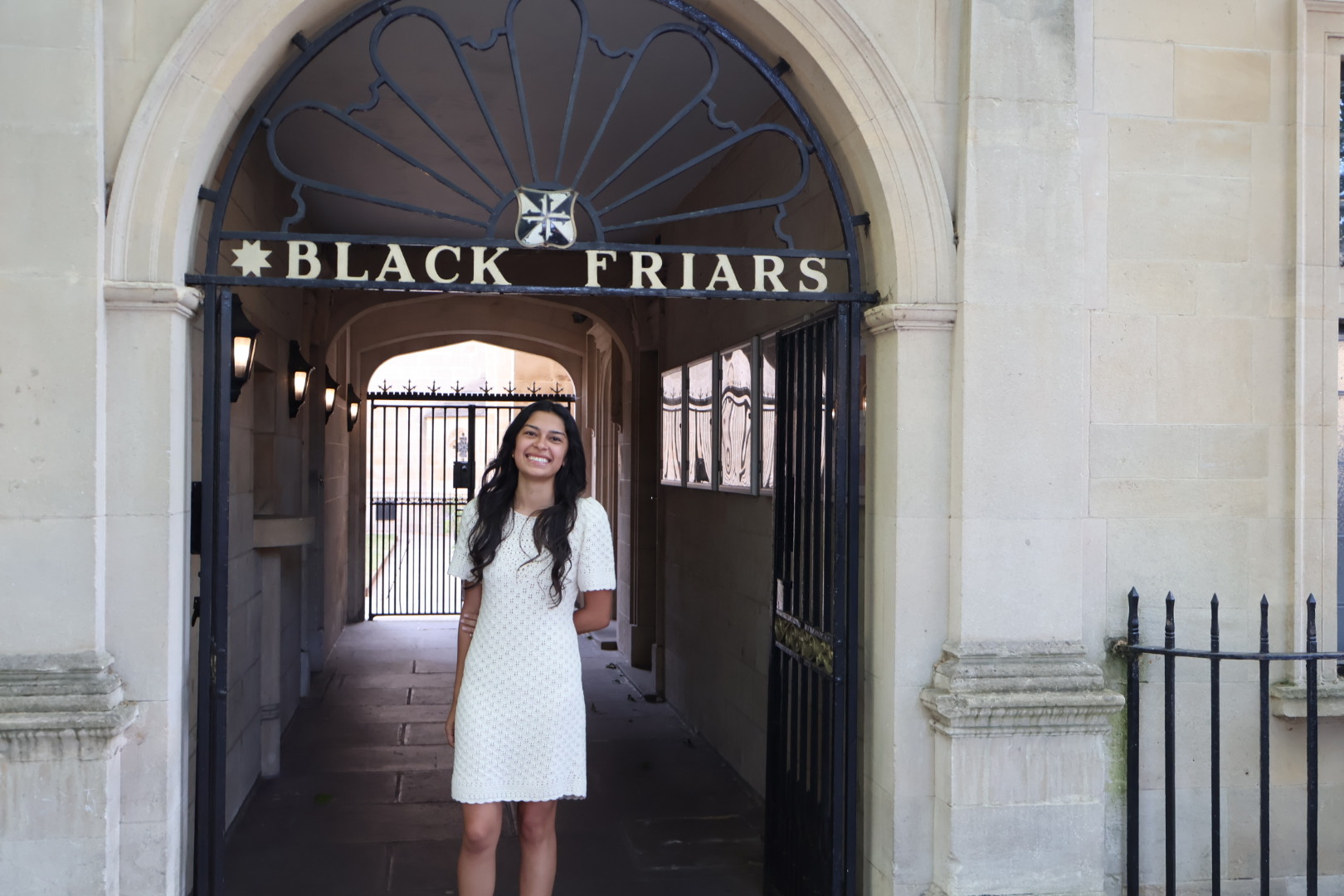
Sabrina Soriano | Citrus College
Alumna takes art history path from Citrus to Yale and Oxford.
More than two years after graduating from Citrus College, former student trustee Sabrina Soriano is learning to be a museum curator and art historian in the hallowed halls of Yale and Oxford.
She spent this most recent summer back in California to intern at the Norton Simon Museum in Pasadena and reflected on her Citrus College experiences that led her to learn in these institutions steeped with history.
“I am incredibly grateful for where my college journey has led me, and especially for the communities that have welcomed me along the way,” Soriano said. “I have been fortunate to learn from people whose work inspires me and whose example continues to shape the student, colleague and person I hope to become.”
While continuing her studies at Yale University, Soriano recently took part in a study abroad experience at the University of Oxford in England.
As a visiting student at Blackfriars Hall, a small academic community on Oxford’s campus, Soriano worked one-on-one with faculty as she studied theology, history and art history. In addition to taking a variety of courses, she began learning French through the Oxford University Language Centre.
For Soriano, one of the semester’s highlights was being selected as a Krasis Scholar at the university’s Ashmolean Museum.
“I was honored to participate as the program’s only visiting student,” Soriano said. “It was an incredible opportunity to learn alongside Oxford students, faculty and museum professionals.”
During her study abroad experience, Soriano was also invited to present her senior essay to faculty, theologians, deans and students at Blackfriars Hall. The presentation led to a productive discussion on the relationship between 19th century French painting and sacred imagery.
In addition to finding new opportunities at Oxford, Soriano continues to shine at Yale University. In summer 2026, she was awarded a Bartels Art Museum Scholar Internship, which supports Yale students pursuing museum careers. Through this internship, Soriano was able to serve as a curatorial intern at the Norton Simon Museum.
“I have been conducting research for the museum’s upcoming exhibition, ‘Manet’s Execution of Maximilian,’ while also working on curatorial research, conservation projects and gallery interpretation,” she said.
Soriano’s successes as an undergraduate student are no surprise, considering how much of an impact she had as a Citrus College student. As an Owl, Soriano served as student trustee and earned multiple honors, including Service Leader of the Year. She was also named as one of 10 students to receive the Key of Knowledge, the college’s highest academic honor.
“Sabrina has consistently modeled the highest levels of student leadership, academic achievement and service for others,” said Dr. Greg Schulz, superintendent/president of Citrus College. “As an Owl, Sabrina left an indelible impact on our campus community. We are thrilled to see what she has accomplished and cannot wait to see what’s next for her.”
Looking ahead to the next few months as she wraps up her studies at Yale, Soriano plans to apply for fellowships as well as master’s and doctorate programs.
“I am excited to continue pursuing a career that brings together art history, museum work, research and teaching,” she said.
Aki S. | Los Medanos College
When Joaquin “Aki” S. arrived in California from Manila, Philippines, in 2023, everything was unfamiliar.
At 18 years old, Aki had to leave behind friends, family, and the life he knew. He arrived in the United States eager to pursue higher education, but as someone’s first time stepping foot in America, navigating an unfamiliar system proved overwhelming.
“I didn’t know anyone here,” Aki said. “It was hard to find resources like scholarships and financial aid, and I felt like I didn’t belong.”
Today, just two years later, the Los Medanos College student maintains a 4.0 GPA, has been selected as a California Community Colleges student ambassador, and has become a leading advocate for student belonging and basic needs. This fall, he plans to transfer to the University of Southern California, where he will study business administration.
Aki’s transformation began after accepting an on-campus position with Student Equity and joining the Student Ambassador program.
“Once I signed up, it all went uphill for me,” he said. “Those two years have been a great experience. I’ve really grown.”
The leadership roles challenged Aki to step outside his comfort zone while helping other students navigate the same uncertainties he once faced.
“I know how it felt to not be able to relate to anyone,” he said. “It became important for me to foster that sense of belonging for other students.”
As a Student Ambassador, Aki discovered a passion for advocacy, public speaking, and peer-to-peer outreach. Alongside another student ambassador, he conducted research on Asian American and Pacific Islander student belonging, presenting their findings at a national conference in New York City. He also traveled to Washington, D.C., where he met with congressional staff to advocate for increased support and funding for Asian American, Native Hawaiian, and Pacific Islander students.
“If you told me two years ago, when I first got here, that I’d be speaking in front of audiences and advocating in Washington, D.C., I wouldn’t have believed you,” he said.
Aki also represented California Community Colleges at the California Higher Education Basic Needs Alliance Summit, where he helped lead statewide conversations on expanding access to food assistance, mental health resources, financial aid, and other essential student services.
“Many students don’t know what we offer,” he said. “They need CalFresh, mental health resources, and family support. Student ambassadors can naturally connect with students because we speak their language and understand what they’re going through.”
Aki hopes to build a career in consulting, using the leadership and communication skills he developed through his community college experience to continue creating opportunities for others.
Alayna Smith | Shasta College
I move a lot. Colorado, Arizona, Wyoming, New Mexico, San Francisco…lots of bouncing around. Eventually, I moved to Redding and decided to attend Shasta College. I was living on my own, facing housing insecurity, and it was really difficult. My GPA dropped below a 2.0, and I was like, “I can either drop out, or I can give it my all and see what happens.”
I started small. I started going to the gym, quit my bad habits, and quit my job. It was a really rough semester, but I made it through. After that, I was like, “Okay, I can do it. I can take on more.” Now I’m taking 15 credits, interning, and hanging out with friends who are motivated and dedicated to school!
When I was moving from state to state, the sky was the only thing that was consistent. I always found myself looking at the stars. So, when it came time to pick a major, I just kept going back to astronomy.
I’ve had some great math professors at Shasta College, like Jennifer McCandless and Cathy Anderson. Cathy helped me see math as beautiful. The MESA program, specifically Jessie Knight, has been a huge beacon of support in my life. Jessie told me I could do it when I didn’t think I could.
I had just gotten my GPA up and staged this comeback when I decided to apply for the highly competitive astrophysics internship with the LAMAT institute at UC Santa Cruz, never expecting to hear anything back. They had already filled the three spots left, and there were at least 150 applicants by the time they got to me. They reached out to Jessie, started talking about funding, and were able to open another spot just for me. This summer fellowship is launching me right into the field I want to be in, doing research with universities in astrophysics. I would love to work at NASA or JPL. I have friends that are aerospace engineers, so I would love to be able to work with them and combine my astronomy and physics education.
My advice would be to take it slowly and go one step at a time. Set your goals high, and then it’s okay if you miss them because you’re already working towards something bigger. Shoot for the moon, and if you miss, you’ll end up in the stars!
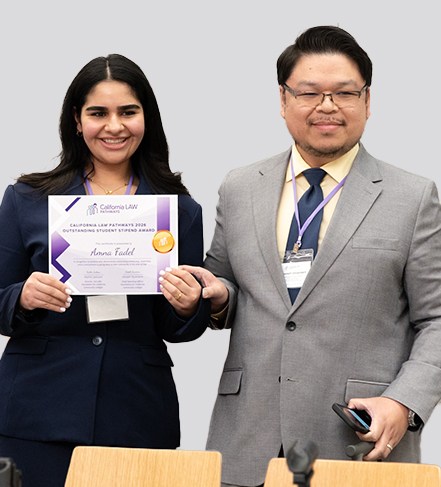
Amna F. | College of the Canyons
First-generation College of the Canyons student Amna F., 20, is preparing for a career in law while already making a difference in her community. As a recipient of the 2026 Cal LAW Outstanding Student Stipend Award, she has emerged as a campus leader dedicated to amplifying student voices and inspiring the next generation of legal professionals.
“It means a lot to me,” Amna said of the award. “It’s such a great milestone to reach and a great way to conclude my community college years.”
Born in Iraq, Amna immigrated to the United States with her family when she was just two years old. Her parents came in search of greater opportunity, instilling in her the value of education and hard work from an early age.
“My parents wanted the American Dream for us,” she said. “I’m the daughter of immigrants, and they taught me to work hard for my degree and a brighter future.”
Those values shaped her desire to pursue a career in law, where she could advocate for others.
“I see how legal systems affect my family as Middle Eastern Americans,” she said. “I know the difference it makes when people have access to information and advocacy that can help them. Representation really matters.”
Amna discovered her passion for law through a business law class in high school and joined California LAW Pathways during her first year at College of the Canyons. At College of the Canyons, she immersed herself in the college’s pre-law activities, participating in mock trials, visiting law schools and courts, networking with attorneys, and serving as the President of the Associated Student Government, representing over 40,000 students.
“Pathways to Law helped me realize law school is possible,” she said.
Beyond campus, Amna is equally committed to expanding opportunities for younger students. She founded the Golden Book Project, collecting donated books for elementary school children to ensure access to reading regardless of a family’s financial circumstances. The initiative later expanded into Golden Tutoring, providing additional academic support to local students. She also founded Legally LSAT, a free pre-law organization that connects aspiring law students with attorneys, admissions professionals, and law students through educational workshops and mentorship opportunities. Through these initiatives, Amna hopes to make the path to higher education and the legal profession more accessible to students from all backgrounds.
“Access to education matters more than someone’s financial status,” she said.
This fall, Amna will transfer to the University of California, Los Angeles (UCLA), where she will study Political Science. She will also serve as the Counseling Director for the UCLA Pre-Law Society, mentoring and supporting fellow pre-law students as they navigate their legal education journeys. She hopes to become a corporate attorney while continuing to advocate for greater representation in the legal profession and inspire future community college students to follow similar paths.
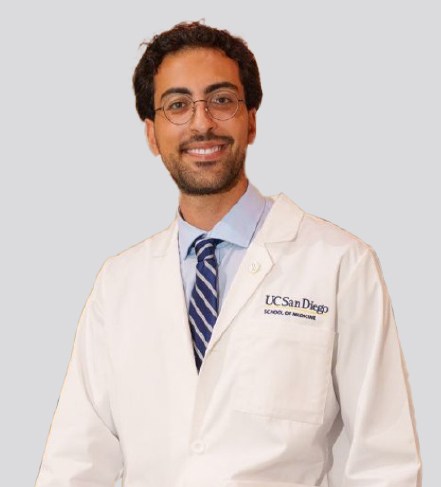
Andrea Sawaya | Cuyamaca and Grossmont Community Colleges
Andrea Sawaya came to the U.S. from Lebanon at age 18 and began his higher education journey at Cuyamaca and Grossmont Community Colleges, where he spent three years, before transferring to the University of California, San Diego (UC San Diego).
After earning his degree in Psychology at UC San Diego, Andrea matriculated into the School of Medicine, where he is part of the Health Equity (PRIME-HEq) Medical Education program. All milestones achieved by the age 23!
One of the proudest moments in his journey came while attending Cuyamaca and Grossmont, when he got accepted into UC San Diego, a critical milestone toward reaching his goals.
He credits the California Medicine Scholars Program (CMSP) at UC San Diego for helping him successfully matriculate into his dream medical school. Available exclusively to former community college students, CMSP provides pre-med students with resources, mentorship, and exposure to careers in medicine.
Andrea is the first CMSP scholar to matriculate into medical school and was recently featured in an article published by the California Medicine Scholars Program. Andrea now serves as an Ambassador for CMSP and is pursuing an MD/MBA degree. His goal is to become a trauma surgeon and work with immigrant communities.
In his free time, Andrea plays piano, and enjoys spending time outdoors rock climbing, hiking, and playing tennis.
Andrea recently returned to Cuyamaca College to participate in a distinguished panel of alumni during Spring Convocation. He emphasized the importance of community college, the unique support it provides, and the life-changing difference it can make in students’ lives, including his own, noting:
“Now is your time to explore! There are plenty of opportunities out there. Community college is a great time to connect with professors, explore new fields, and learn through making mistakes. Seek out mentorship and never be afraid to ask for help.”
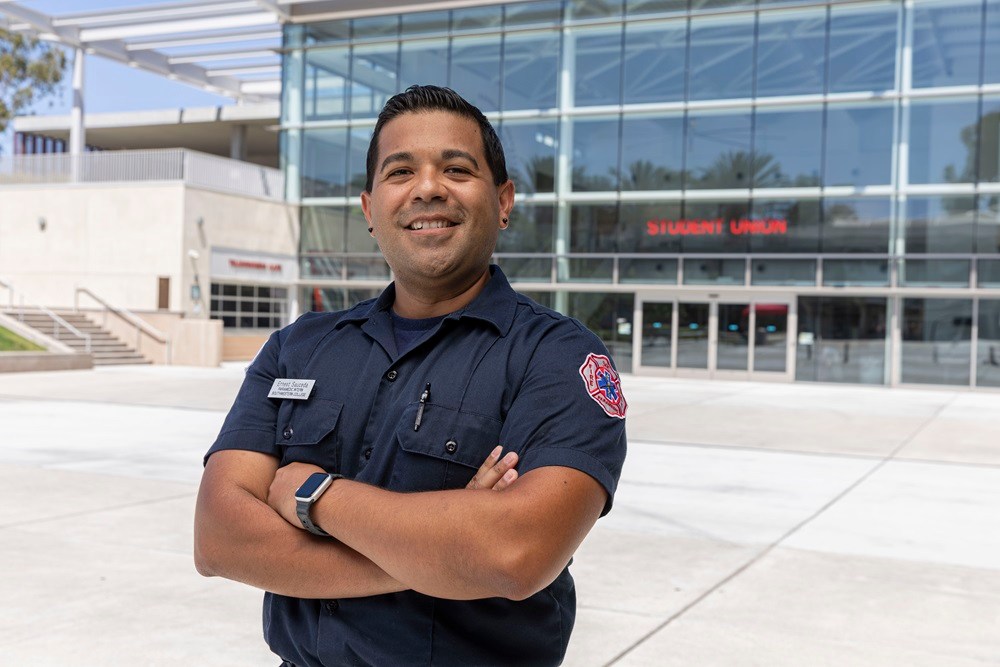
Ernest Sauceda | Southwestern College
For years, Ernest Sauceda performed on some of the world’s most recognizable stages.
He played classical violin with renowned mariachi groups, entertained guests aboard Disney Cruise Line ships, performed for audiences at Busch Gardens Williamsburg, and Universal Studios Japan. He even spent a year in Saudi Arabia with Cirque du Soleil. Music took him across the globe and connected him with people from countless cultures.
However, Sauceda is now preparing for a very different kind of performance. His audience is a patient in crisis, the setting is the back of an ambulance, and the goal is preserving life.
Since June 2025, Sauceda has been a student in Southwestern College’s Paramedic Program Class 53. It is an intensive 18-month program known throughout the region for producing highly skilled emergency medical professionals. After moving to San Diego three years ago, he researched several paramedic programs before choosing Southwestern.
“I was drawn to this program because of the reputation and reverence it has in the EMS community,” Sauceda said. “People spoke about it with a lot of respect, and I wanted to be part of a program that has high expectations of its students.”
Sauceda grew up in San Antonio, Texas, in a highly creative family. His older sister was a trained trumpet player. He followed in her musical footsteps, becoming a classical violinist at a young age. Performance quickly became his profession. He traveled extensively and built a career many aspiring artists would dream about. Yet another calling began to emerge.
The turning point came when his mother was diagnosed with stage 4 breast cancer. Sauceda and his sister became deeply involved in her care, spending countless hours with doctors, nurses, and oncology specialists. During a difficult period, one registered nurse stood out for the compassion and assistance she provided to him.“She helped us navigate some of the hardest moments,” Sauceda said. “I remember thinking that the way she supported us really mattered.”
His mother’s illness changed the trajectory of both siblings’ lives. His sister became an RN, and Sauceda chose emergency medical services. Caring for others has become a full-circle tribute to his mother. “Its a way of honoring her.”
For Sauceda, the transition from performer to future paramedic may seem unexpected, but he sees a common thread.“Stepping onto a stage and stepping onto a medical scene are actually similar,” he said. “The stakes are obviously very different, but the adrenaline and the need to connect with another human being are the same.” It is that emphasis on human connection that has become central to his view of healthcare.
“I want to look like the community I want to help,” he said. “In today’s healthcare industry, we sometimes lose the human element. Yes, it’s a job, but seeing the person behind the illness, that personal aspect, is healing.”
Although the program is demanding, Sauceda says his favorite part so far has been the relationships forming within his cohort. One memory stands out. During a particularly difficult lab simulation, he became frustrated with himself for not grasping the skills as quickly was he wanted. A classmate pulled him aside and reminded him that everyone was learning for the first time. He believes that the sense of encouragement and mutual support from classmates to faculty isn’t just built on individual effort, but on a cohort willing to lift one another up.
When he completes the program, Sauceda hopes to work as an in-flight paramedic providing critical care during air medical transports. Another dream would be to create a nonprofit that expands access to emergency medical services for those who don’t have access.
For Sauceda, the destination may have changed, but the purpose has not. Whether performing before thousands of people or caring for a single patient, he believes the work has always been about connection.
“I never expected I’d find my way to emergency medicine,” Sauceda said. “But that’s exactly where I am.”
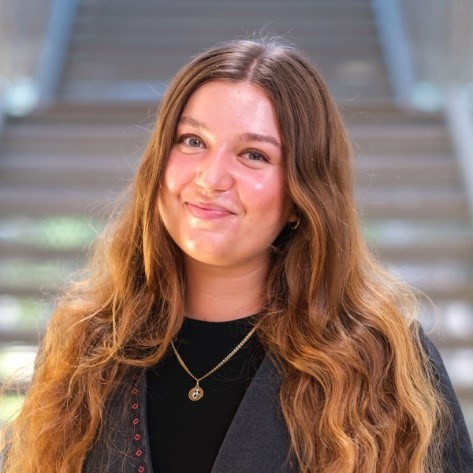
Ganna Zgama | San Jose City College
Ganna Zgama was displaced by war twice in her life, and both times, she found her way back through education. Born in Ukraine, Zgama and her family fled their home as refugees, rebuilt their lives, and were then forced to flee again after Russia’s invasion in 2022. When she arrived in the United States, she did not speak English. By the time she left San José City College (SJCC), she was a 4.0 GPA honors student, her class’s valedictorian, a two-time award-winning podcast creator, and one of the strongest voices in her program.
Zgama started as an ESL student at SJCC, determined to master a language that would let her tell her story on her own terms. She threw herself into coursework, picking up English rapidly while adjusting to an unfamiliar country and an education system she was building her understanding of from scratch. That determination carried her into SJCC’s Communication and Mass Media Studies program, where she graduated as class valedictorian, earned membership in Phi Theta Kappa, completed multiple honors projects, and was named a finalist for the Jack Kent Cooke Scholarship, one of the most competitive undergraduate transfer scholarships in the country.
Her signature achievement was Take a Paws, SJCC’s first student-led podcast, which she founded and led as creative director. The show gave students a place to talk openly about mental health, culture, and identity — topics Zgama said were too often left unspoken on college campuses. Under her direction, Take A Paws earned SJCC’s first National Golden Award in Educational Marketing and drew more than 10,000 views, a remarkable reach for a student production. Her leadership in the classroom and on the podcast earned her the title of SJCC’s Communication and Mass Media Student of the Year for 2025–2026.
Zgama’s influence extended well beyond the podcast studio. She used her personal blog and TikTok platform to walk fellow community college students through the often-confusing processes of applying for internships, scholarships, and university transfer making sure other students didn’t have to navigate those systems as alone as she once did. Her work in digital storytelling was recognized on a national stage when she was invited as a guest creator at HubSpot’s INBOUND conference, representing community college students in a room typically reserved for industry professionals.
Zgama transferred to UC Berkeley to continue studying communication, with an eye toward journalism and media literacy work that combats misinformation. Having lived through war and its media coverage from both sides of the screen, she wants to use her career to help others understand how truth gets distorted, and how storytelling can be a tool for advocacy and community-building rather than division.
Her path forward was not without obstacles. Zgama’s work authorization status remained uncertain, a reality that threatened to affect her ability to support herself financially while pursuing her bachelor’s degree. She was named a recipient of the Robert N. Chang Transfer Scholarship, easing that uncertainty and allowing her to focus on the work she had already proven she was capable of telling stories that help others feel less alone.
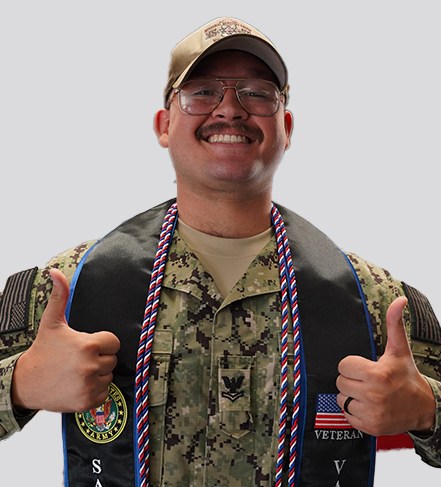
Isaiah F. | San Bernardino Valley College
For Isaiah F., 29, leaving the U.S. Navy didn’t mean the end of his service. It marked the beginning of a new mission.
After serving five years aboard U.S. Navy submarines, Isaiah transitioned from military service to student life at San Bernardino Valley College (SBVC), determined to build a new future despite the challenges of recovering from a traumatic brain injury and other service-related injuries.
Growing up, Isaiah’s family gave him two options: join the military or work on the oil rigs. He chose the Navy because he wanted to serve his country and see the world. When his military career ended, he turned to San Bernardino Valley College to begin his next chapter.
This spring, Isaiah graduated with three associate degrees, a milestone made possible through determination, dedicated campus support, and emergency financial assistance that helped him stay focused on completing his education.
“The Veterans Resource Center is the biggest win at SBVC,” Isaiah said. “No one tells you how to use your benefits when you get out of the military.”
During his time at San Bernardino, Isaiah found guidance through the Veterans Resource Center, which helped him navigate military education benefits and connect with resources specifically for student veterans.
When his laptop unexpectedly stopped working, emergency financial assistance funded by the Automobile Club of Southern California through the Foundation for California Community Colleges allowed him to purchase a replacement, ensuring he could continue balancing school and work without interruption.
“My computer had recently stopped working, and I was able to put the emergency aid money toward another one,” Isaiah said. “I use my laptop for everything, to take notes and for assignments.”
Isaiah will transfer to California Baptist University this fall to study public relations and public affairs. Inspired by his own transition from military service to higher education, he hopes to help fellow veterans better understand the educational and career opportunities available after leaving the military.
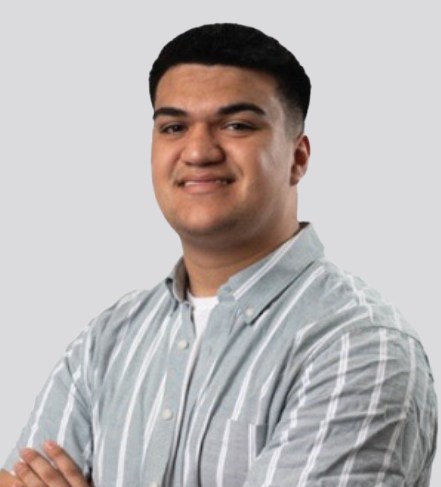
Jayson Garcia | Shasta College
I didn’t get into the four-year computer science programs I applied to out of high school. That was tough—but coming to Shasta College turned out to be one of the best decisions I’ve made.
I found my community through the MESA program. A friend recommended I join, and ever since, I’ve had access to support, opportunity, and people who believed in me.
One of the biggest highlights of my time at Shasta College has been participating in the NASA Community College Aerospace Scholars program. It’s a competitive national program. I made it to Mission Two (of three), serving as project manager for a simulated moon mission with teammates across the country. Now, I’m headed to Mission Three at NASA’s Ames Research Center!
I’ve always loved math—I’ve taken almost every math class Shasta offers. My instructor, Jennifer McCandless, made each class a great experience. I also found joy in teaching—tutoring classmates and helping others understand challenging concepts. I’m transferring to San Jose State, and I hope to find a community like MESA—something collaborative and supportive.
My advice? Be willing to ask for help, even if you think you don’t need it. Also, take chances. I never thought I’d be working with NASA (honestly, even my parents were surprised when I told them I was going to NASA.), but here I am. You never know what you’re capable of until you try.
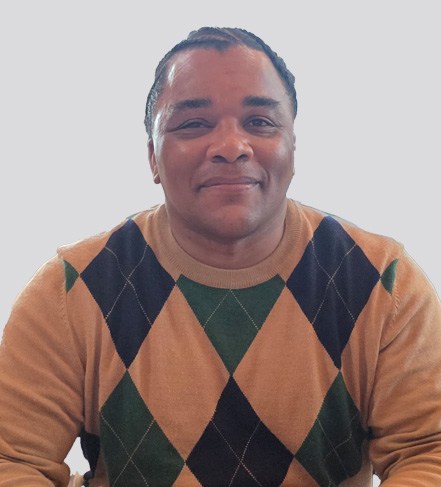
Joseph W. | Santa Rosa Junior College
Joseph W. knows firsthand how life-changing it can be to have someone who believes in you.
Now 46, the Santa Rosa Junior College student is pursuing an associate degree in Social Work and Human Services while training to become a certified wellness coach through the Wellness Coach Designated Education Program. As a former foster youth, Joseph hopes to use his education to become the mentor he never had.
Joseph entered the foster care system at age 5 and remained there until he turned 18. Those experiences shaped his lifelong commitment to supporting young people facing similar challenges.
“I hope to provide guidance and be a mentor for foster youth, someone they can genuinely talk to,” Williams said. “When I was a kid, my dream was to become a police officer, but I didn’t have anyone to show me how. I want to show kids that anything is possible and give them the right tools to prepare for their future.”
Through Santa Rosa Junior College’s participation in California’s Wellness Coach Designated Education Program, Joseph is preparing for a career centered on mental health, mentorship, and community support. The program, part of California’s Children and Youth Behavioral Health Initiative, is helping build a more diverse behavioral health workforce equipped to serve young people across the state.
Outside the classroom, Joseph already puts that mission into practice. He helps lead the Redwood Gospel mobile ministry that provides showers and laundry services to people experiencing homelessness, seeing every act of service as part of a larger purpose.
“I like giving back to the community,” he said. “Everything I do is connected.”
Joseph’s long-term dream is to open a safe home with a private school designed specifically for foster youth, creating a safe, supportive environment where individuals receive mentorship without the stigma often associated with being a kid in foster care.
He is expected to graduate from Santa Rosa Junior College in spring 2027 before transferring to either Sonoma State University or Cal Poly Humboldt to study social work or psychology.
Kaylie V. | College of the Sequoias
At just 21 years old, first-generation College of the Sequoias student Kaylie V. has overcome extraordinary challenges that would have caused many to put their education on hold. This spring, Kaylie earned three associate degrees in Liberal Arts, Child Development, and Liberal Arts Education while grieving the loss of her mother, supporting her younger sister, and reflecting on her own childhood battle with cancer.
“I feel very proud of myself when I think about graduating,” Kaylie said shortly before commencement. “I’ve cried a lot, but I feel incredibly grateful.”
Growing up in Farmersville, Kaylie watched her single mother work tirelessly to provide for the family, often relying on food banks while encouraging her children to pursue opportunities she never had herself.
“My mom always told me to do what I love,” Kaylie said. “She didn’t want me to follow the same path she had.”
That advice stayed with Kaylie as she searched for her own purpose. After a personal battle with cancer, she initially considered careers in agriculture and nursing before realizing her passion lay elsewhere.
“I wanted to help people in the medical field, but I didn’t want to be a nurse,” she said. “When I met with my counselor and discovered social work, I cried because I knew I had finally found what I was meant to do.”
Her purpose became even clearer after her mother passed away earlier this year.
Watching the compassionate support provided to patients and families during her mother’s end-of-life care inspired Kaylie to pursue a career as a medical social worker.
“I learned so much from the support they gave our family,” she said. “It made me realize I want to be there for people during the hardest moments of their lives and make a positive impact on their lives.”
While balancing college, grief, and family responsibilities, Kaylie found a network of support at College of the Sequoias. Through the Finish Line Scholars Program, she received financial assistance to cover transportation costs, making it possible to continue commuting to campus.
“Going to school is a battle in itself,” she said. “Finish Line Scholars helped me pay for gas to and from school.”
She also credits the college’s Extended Opportunity Programs and Services (EOPS) with helping her with counseling, grants, textbooks, and even covering the cost of her commencement regalia.
“They are all the reasons I’ve been able to finish my studies,” Kaylie said.
When ongoing medical appointments were required, the college’s Access and Ability Center worked with her professors to reschedule exams and accommodate her treatment schedule.
“I didn’t want to give up,” she said. “Especially because I have an 11-year-old sister.”
Kaylie has helped raise her younger sister since infancy and remains committed to providing the stability and encouragement her family has always valued.
“I want to make sure she has a successful life,” she said. “I want her to know she’ll always have a home with me.”
Kaylie will transfer to Fresno Pacific University before earning a Master of Social Work.
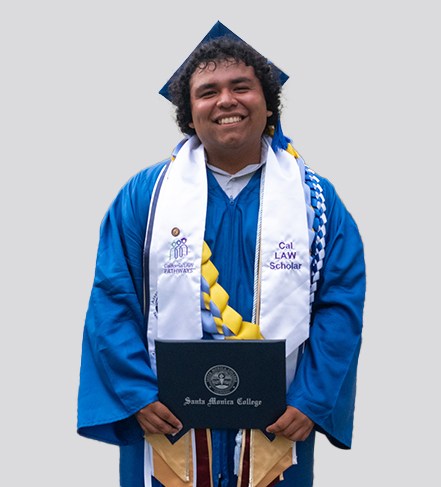
Martin O. | Santa Monica College
Santa Monica College student Martin O., 19, has been named a 2026 Jack Kent Cooke Undergraduate Transfer Scholar, earning one of the nation’s most prestigious scholarships for community college students. The scholarship provides up to $55,000 annually toward a bachelor’s degree at an accredited four-year institution.
Martin’s path to national recognition began at Santa Monica College, where he discovered his passion for immigration law through the California LAW Pathways (Cal LAW) program. A recipient of the 2026 Cal LAW Outstanding Student Stipend Award, he is now preparing for a career in immigration law and public policy.
Born in Anaheim and raised in a small rural town in Puebla, Mexico, Martin returned to Southern California as a child with his family in search of greater opportunity. His parents, who never had the chance to pursue higher education encouraged him to build the future they had always envisioned.
“My parents wanted a better life for us,” Martin said. “They live vicariously through me because I have opportunities they never had.”
After high school, Martin planned to postpone college because his family couldn’t afford tuition. Everything changed after a chance encounter with a former community college student, who introduced him to California’s Promise Program, which provides eligible students with free community college tuition.”I didn’t know community colleges offered these kinds of opportunities,” he said. “Everything changed in a matter of two weeks.”
Martin enrolled at Santa Monica College, choosing the campus for its nationally recognized Public Policy Institute. Throughout his time there, he commuted nearly four hours each day by bus, subway, and train between Fullerton and Santa Monica to pursue opportunities unavailable closer to home.
“On paper, I am a low-income, first-generation student who knew nothing about going to a community college or a university,” Martin said. “Becoming a lawyer seemed so scary, but through Cal LAW’s mentorship, it feels very possible.”
Through Cal LAW, Martin visited law schools, courthouses, and legal organizations, meeting attorneys and law students who had once been community college students themselves. Their stories showed him that a career in law was not only possible, but within reach.
Martin plans to transfer to Georgetown University this fall to pursue its joint public policy program, earning a Bachelor of Arts in Public Policy through the McCourt School of Public Policy. He then hopes to earn a master’s degree in public policy, complete a Juris Doctor, and pursue a career in public service.
Owen Trelles | San Jose City College
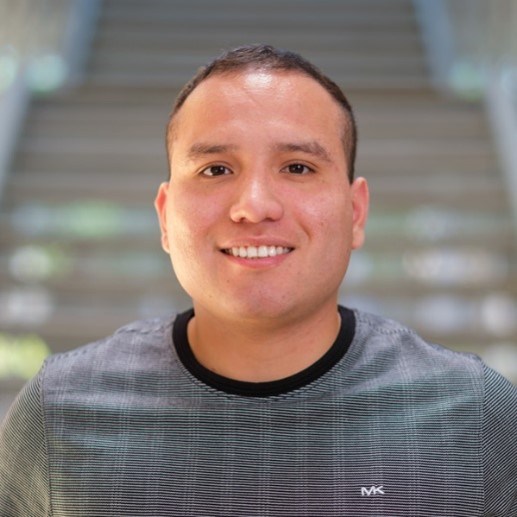
Owen Trelles arrived in the United States in 2022 with no financial support and no fluency in English. He taught himself the language on his own, studying at night after working janitorial shifts to cover his basic needs. That self-discipline — learning a new language and a new country almost entirely on his own terms — became the defining thread of his time at San José City College, where he graduated with a 3.906 GPA.
Trelles worked through ESL coursework and earned his GED, building the academic foundation he had been denied the chance to build earlier in life. He had been financially independent since he was 17 years old, and that independence never let up: he paid $1,050 a month in rent while covering his education and daily expenses almost entirely on his own, with savings that grew thin over time.
Despite those pressures, Trelles built an academic record that put him among SJCC’s strongest students. He earned a place on the President’s List twice and the Dean’s List once, honors that reflect not just intelligence but relentless consistency in the face of financial strain many of his classmates also must think about. His selection as a semifinalist for the Jack Kent Cooke Scholarship, one of the most competitive undergraduate transfer scholarships in the country, was a testament to how far that consistency had carried him.
Trelles was drawn to economics because it gave him a framework for understanding the systems and decisions that shape people’s lives — a subject that connects naturally to his broader interests in global politics and philosophy. He was a committed independent learner outside the classroom as well, working through books and audiobooks on his own time to deepen his understanding of the world. To manage the stress that came with balancing rigorous coursework and full financial self-sufficiency, he ran, using the discipline of training to stay focused and clear-headed.
Trelles transferred to UC Santa Barbara to continue studying economics, with the goal of building a career that rewards the same qualities that got him this far: perseverance, self-discipline, and a refusal to let circumstance define his outcome.
Trelles was named a recipient of the Robert N. Chang Transfer Scholarship, which did more than ease his financial burden. It gave him something he had rarely had access to since arriving in the United States: the ability to focus on his education without also having to focus, every day, on how to keep himself afloat.
Victor Aguilar | Southwestern College
Most Southwestern College students spend their days moving between lectures, study sessions, and part-time jobs.
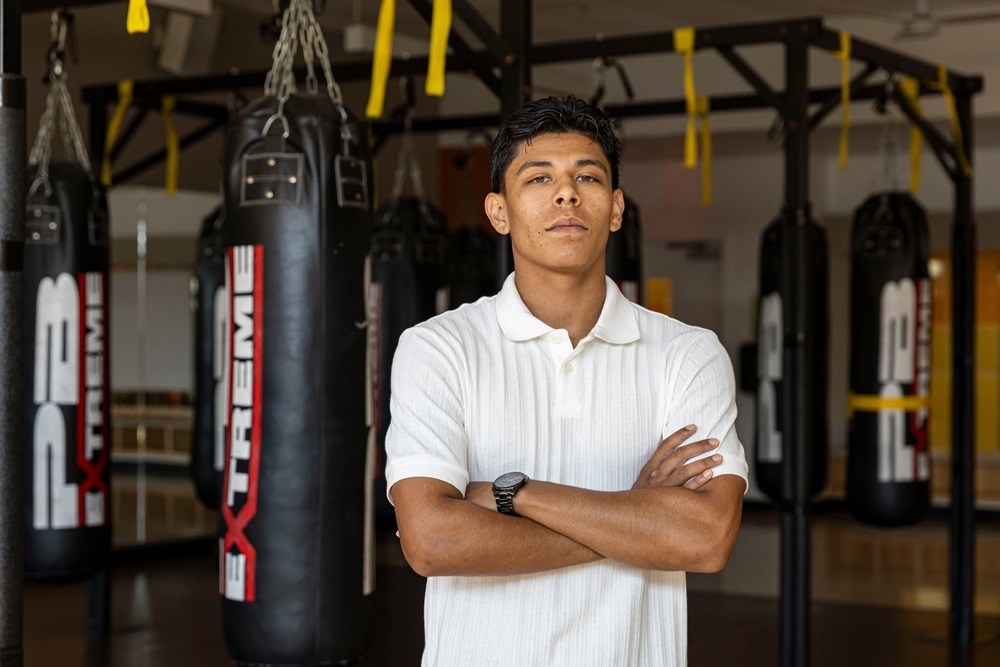
Victor Aguilar spends his time preparing to represent the United States.
The 19-year-old kinesiology student and San Diego native is a member of the U.S. Men’s National Kickboxing Team and one of the country’s most accomplished amateur fighters. He has competed in more than 100 bouts, won more than two dozen championship titles, and traveled around the world facing elite competition.
Then he comes home and heads to class at the Chula Vista campus.
“It’s a full-time job,” Aguilar said of balancing school and athletics. “Everything comes down to discipline.”
Discipline has been a constant in Aguilar’s life since he first stepped into a martial arts gym. He started karate at age three and quickly became a passion. His father encouraged that drive and helped shape the path that would eventually take him to national teams, international tournaments, and championship podiums.
Today, Aguilar trains six to seven hours a day while pursuing his degree at Southwestern College.
The schedule leaves little room for anything else.
“There isn’t much hanging out with friends and goofing around,” he said. “You have to stay focused.”
The commitment has paid off.
Aguilar captured the WAKO K-1 National Championship in 2022-2025 and has earned medals at some of the sport’s highest levels, including a silver medal at the WAKO Youth World Championships. In addition, he has won three United States Muay Thai Open Muay Thai Nationals A Class Championships and represented the United States multiple times in international competition.
His fight career has taken him across Canada, Mexico, Thailand, South America and Europe. Each trip brought new opponents, new challenges, and another chance to represent the United States. Yet for all the travel and accolades, Aguilar speaks just as enthusiastically about his future in the classroom.
His goal is to double major and earn a bachelor’s degree in kinesiology and sports psychology, combining his passion for athletics with a deeper understanding of performance and human development. For Aguilar, Southwestern College has played an important role in helping him balance his academic and athletic goals.
He points to Biology Professor Dr. Ongkeko as someone who left a lasting impression. Aguilar admired the energy and enthusiasm Ongkeko brought to class and appreciated the support he received when competition or injury occasionally conflicted with coursework.
“He’s passionate about what he teaches,” Aguilar said. “That makes a difference.”
He says that support extends beyond a single classroom. His academic advisor also helped steer this Jaguar journey by encouraging him to study a path Aguilar was interested in and could benefit from in the classroom and the ring.
“I believe people here want to see students improve and succeed.”
As Aguilar works toward his professional debut later this year, the demands on his time will only increase. But he is ready for the challenge.
For students pursuing goals that sometimes feel out of reach, Aguilar offers a reminder shaped by years of tenacity and competition.”Don’t let a loss take you off your path,” he said. “Don’t let that define who you are.” It’s sage advice that applies whether you’re stepping into a ring, walking into a classroom, or chasing a dream that takes years to achieve.
For Aguilar, the work continues tomorrow.
There will be another class to attend. Another training session. Another title to chase. And he likes it that way.
Community Colleges Build America
Every student story is part of a larger story about who builds this country and how opportunity reaches more people. Across California, community colleges prepare people for work that matters and lives that move communities forward.
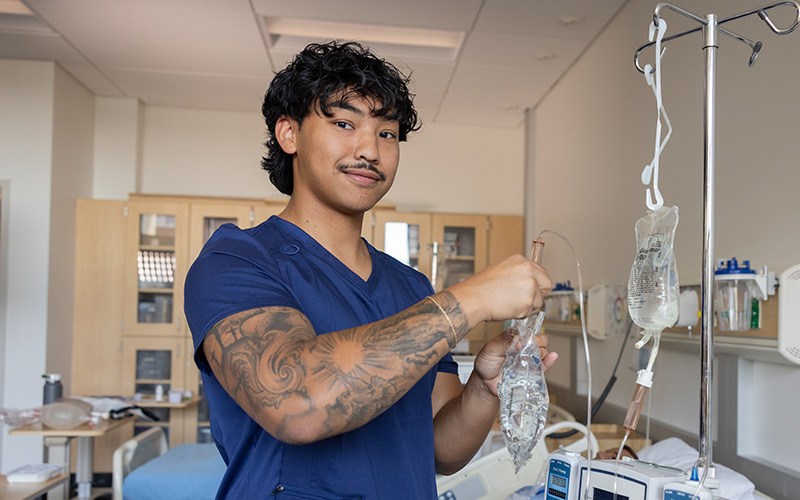
Nurses and health care workers build America
In hospitals, clinics, long-term care facilities, and community health programs, California community college graduates provide care close to home. Health pathways give students hands-on preparation for fields that families and communities rely on every day.
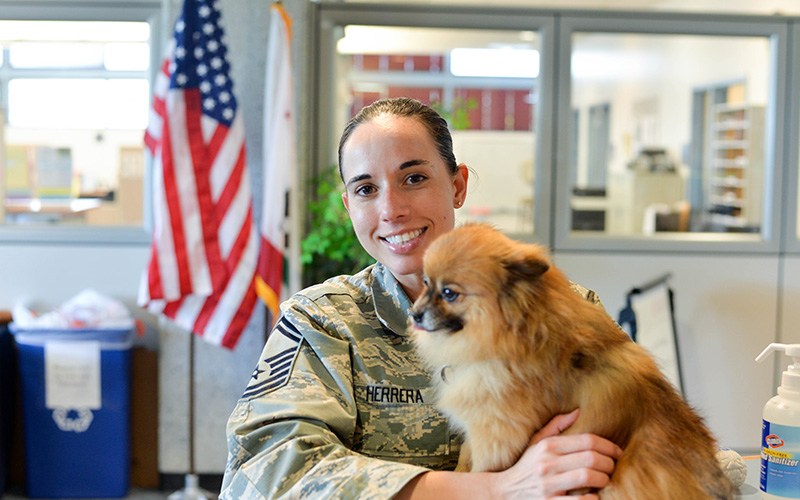
Veterans build America
Veterans bring leadership, discipline, and lived experience to our classrooms and campuses. With Veterans Resource Centers, education benefits guidance, priority registration, and credit for prior learning, community colleges help veterans turn service into new careers, transfer goals, and continued community leadership.
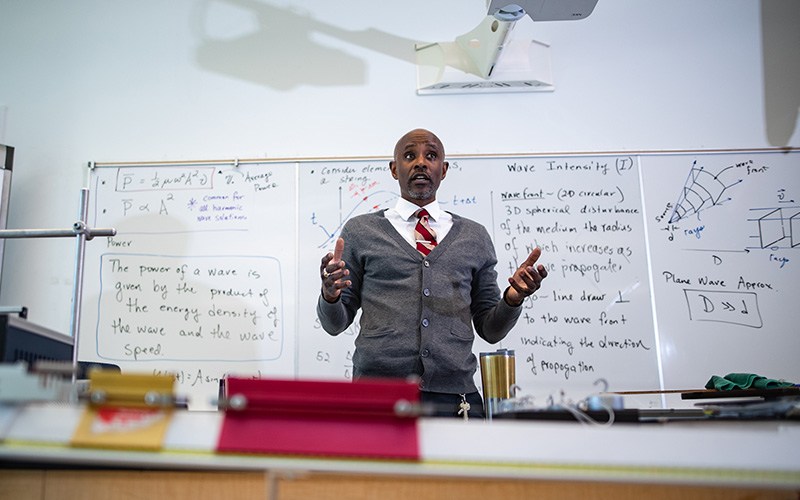
Teachers build America
From early childhood education to teacher preparation and transfer pathways, community colleges help future educators begin their journey. These students go on to support children, families, and classrooms across California, shaping the next generation of learners.
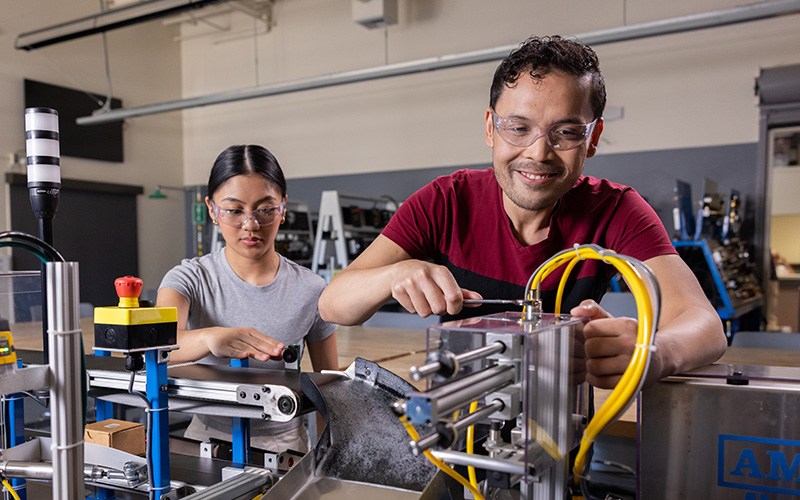
Small businesses build America
Entrepreneurs and small business owners turn ideas into jobs, services, and local investment. Through business, management, accounting, marketing, and entrepreneurship pathways, community colleges help students build the skills to launch, grow, and lead in their communities.
Communities Build America
Community Colleges Build America’s Future
The American Dream is not a single story. It is a student who comes back to college after years away. A parent finishing a certificate. A first-generation student preparing to transfer. A worker gaining new skills. A graduate returning to serve the place that raised them. Across California, community colleges make those futures possible.
California community colleges open doors to higher education, workforce opportunity, and lifelong learning for millions of Californians. As we look toward America’s 250th Anniversary, we celebrate the students, educators, and communities whose achievements continue to strengthen California and contribute to the nation’s future.