Universal Design for Learning
Universal Design for Learning (UDL): A Simple Introduction
Universal Design for Learning (UDL) is a framework for designing courses, programs, services, and learning experiences that work for the full range of learners from the start. Rather than asking learners to adapt to our systems, UDL asks us to design systems that adapt to our learners.
The Three Big Ideas of UDL
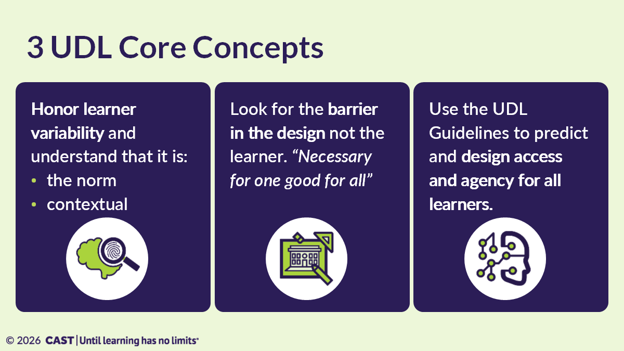
- Variability Is the Rule, Not the Exception. Learners are not “average”. Students differ in:
- Background knowledge and skills
- Language, culture, and identity
- Motivation, confidence, and sense of belonging
- Attention, memory, and executive functioning (planning, organizing, managing time)
UDL assumes this variability from the beginning and plans for it, instead of treating differences as problems to fix later.
- Barriers Are in the Design, Not in the Learners. When students struggle, UDL encourages us to ask:
- Is this a barrier created by how the course is designed?
- Are there unnecessary obstacles that limit access or participation?
For example, a timed, text-only exam may unintentionally block students who process information differently, have anxiety, or are still building academic language skills. UDL shifts the focus from “student deficits” to improving the design.
- The Goal Is Learner Agency. UDL aims to develop expert learners—students who:
- Understand themselves as learners
- Can set goals, monitor progress, and adjust strategies
- Use available tools and supports productively
Learner agency is closely connected to belonging and identity. When students feel seen, valued, and capable, they are more likely to engage, persist, and succeed.
What UDL Is (and Is Not)
- UDL is proactive, not reactive
- UDL supports all learners, not just those with disabilities
- UDL does not mean lowering standards, but removing barriers
- UDL does not mean creating fully individualized lessons — it means building flexible pathways within shared goals
Why UDL Matters in Community Colleges
Community colleges serve learners with diverse goals, responsibilities, identities, and experiences. UDL:
- Improves access and equity
- Reduces the need for retroactive accommodations
- Supports persistence, completion, and transfer
- Aligns with student‑centered, equity‑minded practices
- Prepares learners to be adaptable and self-directed — key requirements for meeting the demands of a rapidly evolving workforce
Why UDL Matters to California Community Colleges
UDL aligns with several key priorities of the California Community College system, including Vision 2030 and Guided Pathways.
UDL + Vision 2030
Vision 2030 Focuses On:
- Equity in Access, Success, and Support
- Reaching learners where they are (online, workplace, community)
- Removing systemic barriers and increasing completion and mobility
UDL operationalizes Vision 2030 by translating equity goals into day-to-day design decisions.
|
Vision 2030 Priority |
UDL Contribution |
|---|---|
|
Equity in Access |
Multiple ways to access content (captions, formats, flexible entry points) |
|
Equity in Success |
Flexible learning paths that support variability and persistence |
|
Equity in Support |
Built-in supports (scaffolds, feedback, planning tools) |
UDL and Guided Pathways
Guided Pathways:
- Creates clear, structured program pathways
- Helps students choose, enter, stay on, and complete programs
- Focuses on removing systemic barriers and improving equity
UDL strengthens Guided Pathways by ensuring that the courses, supports, and experiences within pathways are accessible to all learners.
|
Guided Pathways Goal |
UDL Connection |
|---|---|
|
Clarify the path |
UDL ensures information is clear and understandable (Representation) |
|
Help students enter the path |
UDL supports engagement and belonging from the start |
|
Help students stay on the path |
UDL supports persistence, multiple ways to learn, and flexible supports |
|
Ensure learning |
UDL provides multiple ways to demonstrate learning |
Example: A clearly mapped program (Guided Pathways) and multiple ways to access content, engage, and show learning (UDL) can help more students stay on track and complete their program of study.
CAST UDL Guidelines
The CAST UDL Guidelines are a research-based tool that helps educators design learning environments that are accessible, inclusive, and challenging for all learners.
UDL and Title 5
Title 5 is the section of California state law that governs how California Community Colleges operate.
UDL and Title II ADA
Universal Design for Learning (UDL) and Title II of the ADA both aim to ensure that all students can access and participate in learning.
California AB 2821
California Assembly Bill 2821 (AB 2821) is a new law that focuses on improving how colleges support students with disabilities.
UDL Task Force and Recommendations
Taskforce members in consultation with their constituents, informed the development of a systemwide approach to accessing learning and support while in community college.
FAQ and Additional Resources
Get answers to common questions and continue your learning with UDL resources for Community College educators.